Skip to main content Skip to navigation
Back to top anchor
Home The Governor-General of New Zealand
The Governor-General of New Zealand
Page url
  • Home
  • News and Events
  • Contact us
  • Tours and Education
Open search Close search
  • The Governor-General
    • Biography of The Rt Hon Dame Cindy Kiro, GNZM, QSO
    • Biography of Dr Richard Davies
    • Media statements
    • Speeches by The Rt Hon Dame Cindy Kiro
    • The Governor-General's blog
  • Office of the Governor-General
    • Coronation of King Charles III and Queen Camilla
      • About the Coronation service
      • The King of New Zealand
      • Get involved
      • Coronation events
    • Memorialising Her Majesty Queen Elizabeth II
    • Roles and functions of the Governor-General
      • Constitutional role
        • New Zealand’s Constitution
          • On the Constitution of New Zealand
          • The Queen's constitutional and public ceremonial roles
        • Credentials ceremonies
        • The Executive Council
        • The Reserve Powers
        • The Royal prerogative of mercy
      • Ceremonial role
        • Investiture ceremonies
          • Information for recipients
        • New Zealand Royal Honours
      • Community role
      • International Role
    • Conditions of Appointment
      • Administrator of the Government
      • The Governor-General Act
      • The Governor-General's Flag
    • History
      • New Zealand's Governor-General - an historical perspective
      • Former Governors-General
    • Invitations, patronage and cards
      • Invitations for the Governor-General
        • Dress code for Government House events
      • Hosting the Governor-General
      • Order of precedence in New Zealand
      • Applying for vice-regal patronage
      • Current Vice-regal patronages
      • Congratulatory messages
    • Contacting the Governor-General
      • Guidance for writing to the Governor-General
    • Official portraits
    • Royal Commission Reports
  • Government House
    • Government House Wellington
      • Government House tours
        • Accessibility Information
        • Education tours
          • Educational resources
        • Group tours
        • Upcoming public tours
      • Rooms of Government House
        • Bledisloe Conservatory
        • Blundell and Porritt Rooms
        • Fitzroy Room
        • Galway and guest suites
        • Liverpool Room
        • Main Hallway
        • Maota Ariki
        • The Ballroom
        • The Council Room
        • The Landing
        • The Norrie State Dining Room
        • The Taupaepae
      • Artwork and artifacts
        • Carved coats of arms
          • The carvers and timber
          • Understanding an Achievement of Arms
          • The Designs
          • New Zealand elements
      • Government House centenary
      • Government House conservation
        • Conservation rationale
        • The project in detail
    • Government House Auckland
      • Government House Auckland garden tours
        • Group garden tours
        • Upcoming public garden tours
      • Planning your visit and accessibility
      • History of the gardens
    • Other Government Houses
    • Staff at Government House
      • Management of Government House
    • Tours

Browse all sections

  • The Governor-General
    • Biography of The Rt Hon Dame Cindy Kiro, GNZM, QSO
    • Biography of Dr Richard Davies
    • Media statements
    • Speeches by The Rt Hon Dame Cindy Kiro
    • The Governor-General's blog
  • Office of the Governor-General
    • Coronation of King Charles III and Queen Camilla
      • About the Coronation service
      • The King of New Zealand
      • Get involved
      • Coronation events
    • Memorialising Her Majesty Queen Elizabeth II
    • Roles and functions of the Governor-General
      • Constitutional role
        • New Zealand’s Constitution
        • Credentials ceremonies
        • The Executive Council
        • The Reserve Powers
        • The Royal prerogative of mercy
      • Ceremonial role
        • Investiture ceremonies
        • New Zealand Royal Honours
      • Community role
      • International Role
    • Conditions of Appointment
      • Administrator of the Government
      • The Governor-General Act
      • The Governor-General's Flag
    • History
      • New Zealand's Governor-General - an historical perspective
      • Former Governors-General
    • Invitations, patronage and cards
      • Invitations for the Governor-General
        • Dress code for Government House events
      • Hosting the Governor-General
      • Order of precedence in New Zealand
      • Applying for vice-regal patronage
      • Current Vice-regal patronages
      • Congratulatory messages
    • Contacting the Governor-General
      • Guidance for writing to the Governor-General
    • Official portraits
    • Royal Commission Reports
  • Government House
    • Government House Wellington
      • Government House tours
        • Accessibility Information
        • Education tours
        • Group tours
        • Upcoming public tours
      • Rooms of Government House
        • Bledisloe Conservatory
        • Blundell and Porritt Rooms
        • Fitzroy Room
        • Galway and guest suites
        • Liverpool Room
        • Main Hallway
        • Maota Ariki
        • The Ballroom
        • The Council Room
        • The Landing
        • The Norrie State Dining Room
        • The Taupaepae
      • Artwork and artifacts
        • Carved coats of arms
      • Government House centenary
      • Government House conservation
        • Conservation rationale
        • The project in detail
    • Government House Auckland
      • Government House Auckland garden tours
        • Group garden tours
        • Upcoming public garden tours
      • Planning your visit and accessibility
      • History of the gardens
    • Other Government Houses
    • Staff at Government House
      • Management of Government House
    • Tours
  1. Home
  2. Office of the Governor-General
  3. Roles and functions of the Governor-General
  4. Constitutional role
  5. New Zealand’s Constitution
  6. The Queen's constitutional and public ceremonial roles

The Queen's constitutional and public ceremonial roles

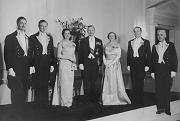
Sir Bernard and Lady Freyberg at Government House
Sir Bernard and Lady Freyberg with senior personal and official staff at Government House.

An essay on Queen Elizabeth's reign by the late Gavin McLean, former Senior Historian with the Ministry for Culture and Heritage.

On 11 February 1952 New Zealand's Governor-General, Lord Freyberg, stood on the steps of Parliament Buildings, accompanied by dignitaries and the public, and proudly ‘wearing the same scarlet tunic that he had worn as a Grenadier Guard thirty years before, which fitted him perfectly’. He  proclaimed ‘the High and Mighty Princess Elizabeth Alexandra Mary’ to be ‘Queen Elizabeth the Second, by the grace of God, Queen of this Realm and of all her other realms and territories, Head of the Commonwealth, defender of the faith.’ She had succeeded her father, King George VI, on the day he died, 6 February.

While the language of the proclamation may sound old-fashioned, much had changed over the preceding half century. When Queen Victoria died in 1901, New Zealand was a self-governing colony (although the governor could refer legislation to London for a final decision if he thought it breached imperial interests). The colony became a dominion in 1907, and in 1947 it ratified the Statute of Westminster, making the country – now no longer a ‘dominion’, and soon to be called a ‘realm’ – fully independent. We were now New Zealand citizens, not Britons.

Under the concept of the ‘divisible Crown’, the Queen is the head of state of 16 countries. She reigns as Queen of New Zealand independently of her position as Queen of the United Kingdom. The Sovereign and the House of Representatives together make up the Parliament of New Zealand. As a constitutional monarch, the Queen of New Zealand acts entirely on the advice of New Zealand government ministers.

In Britain, the Queen meets visiting New Zealand prime ministers and governors-general designates. Many former prime ministers have shared John Marshall’s belief that the Queen is ‘well informed and keenly interested in our position.’ Marshall noted that the Queen talked knowledgeably about New Zealand without displaying political partisanship. But these discussions can be meaty. In 1994, for example, Prime Minister Jim Bolger talked with her for three-quarters of an hour, during which time he ‘talked in detail about the reasons why I believed New Zealand becoming a republic was inevitable.’

The Queen also honours special achievements by New Zealanders in the United Kingdom and sends messages to New Zealand in times of triumph and tragedy. She also maintains important links with New Zealand military units. And even today, many New Zealanders watch or listen to her Christmas broadcast, a tradition initiated by George V in 1932.
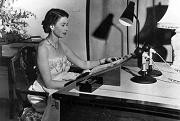
Sir Bernard and Lady Freyberg at Government House
The Queen broadcasts her Christmas message from Government House in Auckland

In addition to meeting visitors to Britain, the Queen meets our prime ministers whenever she attends Commonwealth Heads of Government Meetings (CHOGM) around the world.

Although the Queen confers royal honours on the advice of the Prime Minister, she can independently bestow certain honours on New Zealanders for personal service to the monarchy.

On occasions when the Queen has been in New Zealand she formally opened Parliament and read the Speech from the Throne. Before New Zealand discontinued appointments to the Privy Council, she also presided over local meetings of that body.

Governor-General

Because the Queen spends most of her time outside of New Zealand, she is represented by the Governor-General in her absence.

The Queen appoints governors-general, who have essentially the same powers that she does, for a five-year term on the advice of the New Zealand prime minister. All governors-general appointed since 1972 have been New Zealand residents. 

Although most communication between the governor-general and the monarch is through official channels, the Governor-General has usually maintained the custom of writing her a regular personal letter.

Two heads of state in the same place?

During the Queen’s reign, ‘the divisible Crown’ has been applied domestically. During earlier royal tours, the governor-general met the distinguished visitors at selected official occasions and hosted them at Government House, but was otherwise expected to keep a low profile while the royals toured – ‘disappear to the South Island’, Government House officials suggested. As late as 1986 Prime Minister David Lange advised Governor-General Sir Paul Reeves (a former Anglican bishop) to be ‘a bit like the Holy Ghost, Your Excellency’ while the Queen and the Duke visited.

That changed shortly afterwards. ‘In previous times, it had been expected that the resident Governor-General would dematerialise when the Queen was in the country’, Reeves’s successor, Dame Catherine Tizard, recalled. ‘There could be only one New Zealand head of State at a time! Fortunately for me, that bit of stuffy protocol was quietly dropped, so I didn’t have to clear out every time she came to stay, though I did move down the hall to let her have the main suite … Bills were still signed, engagements kept, correspondence dealt with.’

Reigns, not rules

In 1867 English constitutional expert Walter Bagehot drew a distinction between what he called ‘the dignified parts’ of the British constitution, ‘those which excite and preserve the reverence of the population’ and ‘the efficient parts’, ‘those by which it, in fact, works.’

The monarchy is at the centre of the ‘dignified parts’ and has been since Britain granted New Zealand responsible government in 1856. Modern New Zealand is a constitutional monarchy. This means that the monarch (usually through her representative, the governor-general) acts on the advice of the elected government. In other words, she reigns, while the government rules.

Sidebar anchor
In this section
  • Coronation of King Charles III and Queen Camilla
  • Memorialising Her Majesty Queen Elizabeth II
  • Roles and functions of the Governor-General
    • Constitutional role
      • New Zealand’s Constitution
        • On the Constitution of New Zealand
        • The Queen's constitutional and public ceremonial roles
      • Credentials ceremonies
      • The Executive Council
      • The Reserve Powers
      • The Royal prerogative of mercy
    • Ceremonial role
    • Community role
    • International Role
  • Conditions of Appointment
  • History
  • Invitations, patronage and cards
  • Contacting the Governor-General
  • Official portraits
  • Royal Commission Reports

New Zealand Royal Honours and Investitures

Insignia of the New Zealand Royal Honours system.

The Governor-General holds investiture ceremonies for New Zealand Royal Honours on behalf of The King.

Information for recipients

Find out more about the honours system

Content wrapper

Help us improve the Governor-General website

Your feedback is very important in helping us improve the the Governor-General website.


More menu anchor

Back to top

The Governor-General
  • Biography of The Rt Hon Dame Cindy Kiro, GNZM, QSO
  • Biography of Dr Richard Davies
  • Media statements
  • Speeches by The Rt Hon Dame Cindy Kiro
  • The Governor-General's blog
Office of the Governor-General
  • Coronation of King Charles III and Queen Camilla
  • Memorialising Her Majesty Queen Elizabeth II
  • Roles and functions of the Governor-General
  • Conditions of Appointment
  • History
  • Invitations, patronage and cards
  • Contacting the Governor-General
  • Official portraits
  • Royal Commission Reports
Government House
  • Government House Wellington
  • Government House Auckland
  • Other Government Houses
  • Staff at Government House
  • Tours
News and events
  • News archive
Publications
  • Publications archive
  • Historical essays
  • Media statements
  • Speeches
  • Image galleries
  • Image search

© Crown copyright: Government House, Department of the Prime Minister and Cabinet

  • Contact us
  • Copyright and licensing
  • Privacy
  • Site map
New Zealand Government